
What Documents Are Needed For An Edmonton Permit Application?
A complete checklist of documents required for Edmonton building permit applications.
What Documents Are Needed For An Edmonton Permit Application?
In most residential projects, the documents needed for an Edmonton permit application include detailed drawings, project information, and in many cases, professional engineering reports or stamped plans. The City of Edmonton reviews permit submissions to confirm safety, code compliance, and zoning alignment. Submitting complete and accurate documentation upfront is the fastest way to avoid delays, rejection notices, and costly resubmissions.
At Edmonton Structural Engineers, we regularly see permit applications slowed down because key documents were missing or incomplete. Below, we break down exactly what documents are required, how they are reviewed, and how to prepare a permit-ready submission that moves smoothly through approval.
Understanding Edmonton Permit Application Requirements
Why Documentation Matters For Edmonton Permits
The City of Edmonton relies on documentation to verify that proposed construction complies with the Alberta Building Code and local bylaws. City reviewers do not redesign projects. They review what is submitted. If documents are unclear, incomplete, or missing, the permit review stops.
Knowing what documents are needed for an Edmonton permit application helps homeowners plan accurately and avoid frustration.
How The City Reviews Permit Submissions
City reviewers examine each application for zoning compliance, structural safety, fire safety, and general code adherence. Each discipline relies on specific documents to perform that review. Missing even one required document can delay the entire application.
Core Edmonton Permit Application Documents
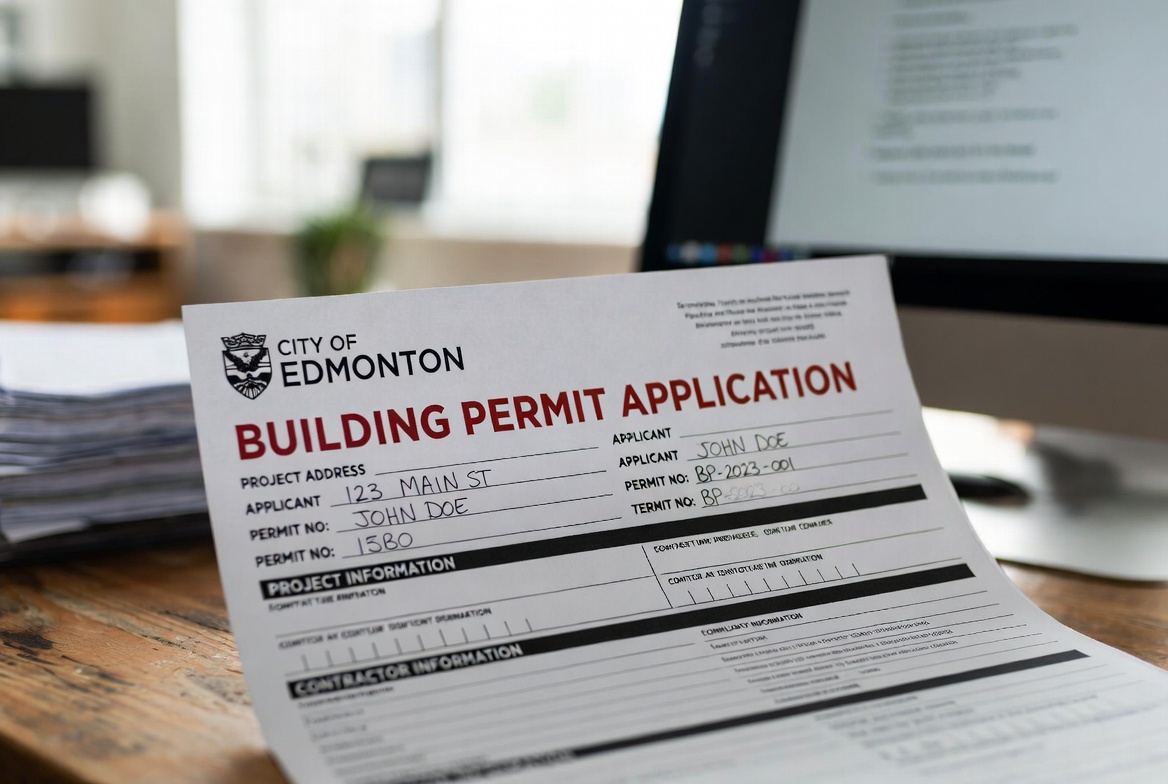
Completed Permit Application Form
Every permit submission begins with a completed application form. This includes project details, property information, and scope of work. Errors or vague descriptions here often trigger follow up requests.
Site Plan Or Plot Plan
A site plan shows property boundaries, building locations, setbacks, and lot dimensions. This is a critical component of City of Edmonton permit application documents, especially for additions, decks, garages, and exterior work.
Site plans must be clear, to scale, and match the property title information.
Floor Plans
Floor plans show existing and proposed layouts. These drawings must include room dimensions, wall locations, door and window sizes, and use of space. For interior renovations, floor plans help reviewers understand how the project affects the structure.
Elevation Drawings
Elevations show exterior views of the building. These are required for additions, exterior alterations, decks, and garages. Elevations help the City assess height, appearance, and zoning compliance.
Structural And Engineering Documents
Structural Drawings
Structural drawings show how loads are supported and transferred. This includes beams, columns, foundations, and framing details. Structural drawings are a core part of Edmonton building permit required documents for renovations and additions.
Engineer Stamped Drawings
If your project involves structural changes, the City will require engineer stamped drawings. These drawings confirm compliance with the Alberta Building Code and structural safety standards.
This is one of the most commonly missing building permit Edmonton documents and a frequent cause of rejection.
Structural Engineer Reports
In some cases, the City may request an engineer’s report rather than full drawings. Reports are often required for foundation assessments, load evaluations, or verification of existing structures.
Additional Documents Often Required
Title Search Or Land Title
A current title search may be required to confirm property ownership and identify any registered restrictions.
Development Permit Approval
Some projects require a development permit before a building permit can be issued. Proof of approval may be required as part of the submission.
Energy Efficiency Documentation
Certain projects may require energy efficiency forms or compliance documentation depending on scope.
Truss Or Manufacturer Drawings
Prefabricated components such as roof trusses may require manufacturer supplied drawings, sometimes reviewed by an engineer.
Documents Required By Project Type
Interior Renovations
Interior renovations typically require:
- Floor plans
- Structural drawings if applicable
- Engineer stamped drawings for load bearing changes
Basement Developments
Basement projects often require:
- Floor plans
- Structural details
- Engineer stamped drawings if structural changes are involved
Home Additions
Additions require a full set of documents including:
- Site plan
- Floor plans
- Elevations
- Structural drawings
- Engineer stamped drawings
Decks And Garages
Decks and garages often require:
- Site plan
- Elevations
- Structural details
- Engineering if attached or oversized
Common Reasons Edmonton Permit Applications Are Rejected
Missing Engineering Documents
Many homeowners underestimate when engineering is required. Submitting without it leads to immediate delays.
Incomplete Or Unclear Drawings
Drawings without dimensions, scale, or labels often trigger requests for clarification.
Mismatched Information
Differences between drawings, application forms, and site plans cause confusion and rejection.
How To Prepare Permit Ready Documents
Start With Accurate Existing Conditions
Drawings should reflect actual site conditions. Guessing dimensions or layouts leads to errors.
Use Professional Drawings
Professional drawings are easier for City reviewers to interpret and approve.
Confirm Engineering Requirements Early
Determining whether engineering is required before submission prevents rework.
How Edmonton Structural Engineers Helps With Permit Documents
Full Permit Ready Drawing Packages
At Edmonton Structural Engineers, we prepare structural drawings and reports designed specifically for City review.
Engineering Review And Stamping
We provide stamped drawings where required and confirm compliance with City expectations.
Support Through City Requests
If reviewers request clarification or revisions, we respond efficiently to keep permits moving.
Timing And Review Considerations
How Long Document Review Takes
Complete submissions move faster. Incomplete document packages can delay review by weeks.
How Revisions Affect Timelines
Each revision resets parts of the review process. Submitting complete documents upfront saves time.
Risks Of Incomplete Permit Documentation
Stop Work Orders
Starting construction without approved documents can result in stop work orders.
Insurance And Liability Issues
Unpermitted work may not be covered by insurance.
Resale Complications
Missing permits or documentation can delay or derail property sales.
Questions Homeowners Ask About Edmonton Permit Documents
What Documents Are Needed For An Edmonton Permit Application For Renovations?
Typically floor plans, structural drawings, and engineering if structural changes are involved.
Do All Permits Require Engineer Stamped Drawings?
No. Only projects involving structural elements require stamped drawings.
Can I Submit Documents In Stages?
Some documents can be added later, but missing required documents will delay approval.
Will The City Tell Me What Documents Are Missing?
Yes, but waiting for City feedback often slows the process.
Are Hand Drawn Plans Accepted?
Simple hand drawn plans may be accepted for minor projects, but professional drawings are strongly recommended.
How Do I Know If My Documents Are Sufficient?
Consulting a structural engineer before submission provides clarity and confidence.
Final Thoughts On Edmonton Permit Application Documents
Understanding what documents are needed for an Edmonton permit application is one of the most important steps in any renovation or construction project. Complete, accurate documentation protects your timeline, budget, and long term property value.
Submitting permit ready documents from the start reduces delays and improves approval outcomes.
Work With Edmonton Structural Engineers
Edmonton Structural Engineers offers trusted residential structural design, inspections, and permit-ready reports. Safe, accurate, and fully code compliant.
Call Us For A Quote: 587 400 0809


Our Services
We provide tailored structural engineering solutions for homeowners, builders, and renovators in Southern Alberta.